About
The Digital Storytelling Competition is a category of the UH Centennial Games, an event celebrating 100 years of the University of Houston by showcasing students' creativity and academic ability.
Participants may submit individually or in teams of up to 5 students. The competition invites students from every academic discipline to combine an original story or script with narration and multimedia elements to communicate an idea, experience, argument, or creative vision.
Challenge Overview
Participants may submit individually or in teams of up to 5 students. The competition invites students from every academic discipline to combine an original story or script with narration and multimedia elements to communicate an idea, experience, argument, or creative vision.
Digital Storytelling Submission Categories
Each project must be entered in the one category that best represents the primary subject of that digital story:
- Art, Cultures & Religion
- Computers & Technology
- Social Sciences
- Health & Medical
- Science & Mathematics
- Music
- Personal Stories & Reflections
- Places & Travel
- Physical Education & Sports
- Pop Culture
- Engineering
- Education
- University of Houston
An individual or group may submit up to three projects, provided that each project is entered in a different category. An individual or group may not submit more than one digital story in the same category, and the same digital story may not be entered in multiple categories. If a story relates to multiple subjects, participants should choose the category that most closely reflects its main purpose and message. Organizers may reassign an entry when another category is clearly more appropriate; if reassignment would create a duplicate-category entry for that participant or group, the organizers will require the entrant to select which project remains eligible.
Participants and Team Qualifications
Eligibility
- The competition is open only to eligible undergraduate and graduate students at the University of Houston main campus.
- Each participant must successfully complete a full course load at the University of Houston main campus in Fall 2026, register for a full course load at the University of Houston in Spring 2027, and remain in good academic standing.
- Students from any UH main-campus college, major, or program may participate.
- High school students, students from other colleges or universities, alumni, faculty, staff, and individuals who are not currently enrolled UH students are not eligible to compete.
- Participants must use their UH email address when registering.
- A project may be submitted as either an individual entry or a group entry with no more than five officially registered students.
- An individual participant or the same registered group may submit up to 3 digital stories. Each story must be entered in a different Digital Storytelling category.
- There is no fee to enter.
Individual and Group Entries
An individual entry must be submitted by one eligible UH student.
Group entries
- Every group member must meet the eligibility requirements above.
- A group may include up to 5 eligible students.
- One student must be designated as the team leader and primary contact.
- The team leader will register and submit the project on behalf of the group.
- The full name, UH Cougarnet email address, college or program, and role of every team member must be provided.
- All group members must be listed by the registration deadline.
- A group submission will be judged as one entry and will receive one project-level award.
Digital Storytelling Format Content and Guidelines
Each submission must:
- Tell a coherent story or communicate a clear message through a purposeful combination of script, narration, and multimedia.
- Include an original script created by the participant or team.
- Include narration or another intentional spoken-word component.
- English narration is encouraged. Stories using another language must include accurate English subtitles.
- Use multimedia elements such as original or properly licensed images, graphics, animation, music, sound, and/or video.
- Be substantially created by the registered participant or team for this competition.
- Be suitable for presentation in a University of Houston educational setting and comply with applicable UH policies.
- Avoid plagiarism, copyright infringement, unlawful content, harassment, discrimination, obscenity, defamation, and unauthorized disclosure of private or confidential information.
- You may submit previously published or course-created work only if it remains the participant's original work, meets all current competition requirements, and has not previously received an award in the Centennial Games. Any prior publication, class use, sponsorship, or award must be disclosed.
Your digital story should include the following items:
- An original script or story (a separate script file for submission will be required)
- Multimedia elements such as images and sounds. Video clips are optional.
- A narration, preferably a voice-over by the author.
Length and Technical Format
- Recommended duration: 3–5 minutes.
- Permitted duration: 2–6 minutes, including opening and closing credits.
- Preferred video format for uploaded files: MP4 using H.264 video and AAC audio.
- Preferred submission methods:
- UH OneDrive link with view access or a Public or Unlisted
- YouTube link with view access or a Public or Unlisted
- Direct MP4 upload is available as an alternative and must not exceed 300 MB.
- Participants must retain their original project files. Uploaded video copies may be removed after judging and the award process under the published retention schedule.
- Minimum resolution: 1280 × 720 (720p). A resolution of 1920 × 1080 (1080p) in a 16:9 aspect ratio is recommended. Videos must be clear enough for judges to read on-screen text and evaluate visual details.
- The spoken audio must be understandable, and subtitles or captions are strongly encouraged for accessibility.
- The title shown in the video and the title entered in the submission form must match.
- Uploaded files should follow this naming pattern: Project Title — Lead Student Name.
A working UH OneDrive link with view access or a Public or Unlisted YouTube link is preferred. A OneDrive link must allow judges to view the file without requesting permission, must not require a password, and must remain active through the award process. Participants should test shared links in a private or incognito browser before submission. Direct MP4 upload is available as an alternative and must not exceed 300 MB. Participants must retain their original project files. Uploaded copies may be removed after judging and the award process under the published retention schedule. Entries that cannot be opened, viewed, or heard may be ruled ineligible if the technical problem is not corrected by the stated deadline.
Participants should test shared links in a private or incognito browser before submission. Direct MP4 upload is available as an alternative and must not exceed 300 MB. Participants must retain their original project files. Uploaded copies may be removed after judging and the award process under the published retention schedule. Entries that cannot be opened, viewed, or heard may be ruled ineligible if the technical problem is not corrected by the stated deadline.
See the resources page at http://www.distco.org/resources for more information. Here are a few software options to consider:
- WeVideo (a cloud-based video editor integrated with Google Drive) for beginner to advanced users creating Digital Stories.
- Clipchamp (built into Windows 10/11) for beginner to intermediate users.
- iMovie (free on Mac, iPad, and iPhone) for beginner to intermediate users.
- DaVinci Resolve (free version available) for advanced users.
- The story and script must be original unless the participant has lawful permission to adapt source material and clearly discloses the adaptation.
- Participants are strongly encouraged to create their own images, video, narration, music, and sound.
- Third-party media may be used only when it is in the public domain, covered by an appropriate license, used with written permission, or otherwise lawfully used.
- Simply finding an item online does not grant permission to reuse it. A citation alone does not replace a required license or permission.
- All non-original elements must be credited in the video and documented in the copyright and media-sources record.
- Participants must comply with the license terms for each item, including attribution, noncommercial-use, share-alike, modification, and distribution conditions.
- Commercial music, movie or television clips, social-media clips, logos, characters, and other protected content must not be used without appropriate authorization or a clearly supportable legal basis.
- Participants should retain copies of permissions, licenses, receipts, source links, and original project files. Organizers may request them during eligibility review.
- By submitting, participants certify that their entry does not knowingly infringe another person's copyright, trademark, privacy, publicity, or other rights.
Example of how Copyright Information should be cited:
| Element | Placement or duration | Title/description | Creator or rights holder | Source URL or origin | Copyright status, license, and modifications |
|---|---|---|---|---|---|
| Background music | Throughout the entire digital story | Wanders of the Earth | Grand_Project | https://pixabay.com/music/adventure-wonders-of-the-earth-550792/ | Record the exact license or written permission and any edits, such as “CC BY 4.0; trimmed to 45 seconds.” |
| Image | 00:05–00:10 | Machapuchare Mountain, Nepal | Razone Gn | https://www.pexels.com/photo/26926327/ | Pexels License; free to use and modify; displayed for 5 seconds. Attribution is not required but is recommended. |
| Video clip | 00:10–00:20 | Aerial footage of a green mountain landscape | Luz Calor Som | https://www.pexels.com/video/26599523/ | Pexels License; free to use and modify; trimmed to a 10-second excerpt. Attribution is not required but is recommended. |
| Sound clip | 00:10–00:20 | Wind blowing on a mountain in the Atacama Desert | Félix Blume | https://freesound.org/s/156414/ | CC0 1.0 public-domain dedication; reuse and modification permitted; trimmed to 10 seconds. |
Generative AI may be used only as a disclosed creative or production aid and may not replace the participant's authorship, judgment, or substantial creative contribution.
- Participants must identify each generative-AI tool used and briefly explain how it contributed to the script, images, audio, video, editing, translation, captions, or other parts of the project.
- AI-generated or AI-modified material must be included in the media-sources record.
- Participants remain fully responsible for the accuracy, originality, legality, accessibility, and ethical use of all submitted content, including AI-generated content.
- Participants must not submit private, confidential, copyrighted, or personally identifiable material to an AI service without authorization.
- Undisclosed or misleading AI use may result in a score reduction or disqualification.
- Judges will evaluate the students' storytelling, creative decisions, and demonstrated authorship—not the mere use of an AI tool.
You may use AI responsibly when developing digital stories. You must disclose AI use transparently. Here are the acceptable uses of AI:
- Brainstorming
- Proofreading the script: Don’t use AI to generate a script for you. You can use AI to proofread and grammar-check your original written story; organizers may pass your script through an AI checker)
- Image generation: This is allowed as long as you clearly indicate in the copyright section how you created the image. This practice is not encouraged; whenever possible, use an original photo or image that you took or created. Any AI-created image that’s not properly cited will lower your chances of scoring high on our evaluation rubric.
- Video or animation generation: The same rules as image generation apply
- Audio: Sound clips can be generated by AI; they should be properly disclosed
- Audio enhancement and speech clarification: Your originally recorded audio narration can be improved by AI to remove background noise or make it sound more studio-quality. Disclose the use of AI sound enhancements.
- Music: AI-generated background music may be used; however, it must be properly cited.
Example of AI use should be disclosed with your submission:
| AI use | Allowed use | Disclosure example |
|---|---|---|
| Brainstorming | Generating ideas, topics, or outlines | “ChatGPT was used to brainstorm possible story topics.” |
| Script proofreading | Checking grammar, spelling, and clarity in the student’s original script; AI may not write the script | “Grammarly was used to proofread my original script.” |
| Image generation | Creating images when original or properly licensed images are unavailable; original student-created images are preferred | “Adobe Firefly generated the mountain image using the prompt: ‘Sunrise over a snowy mountain.’” |
| Video or animation | Generating or assisting with short video clips or animations | “Canva AI was used to create the animated background.” |
| Sound effects | Generating sound clips or effects | “ElevenLabs generated the wind sound effect.” |
| Audio enhancement | Removing noise or improving the clarity of the student’s original narration | “Adobe Enhance Speech was used to reduce background noise.” |
| Music | Generating background music | “Suno was used to create the instrumental background music.” |
By submitting an entry, participants grant the University of Houston and the UH Centennial Games permission to display, publish, reproduce, and share their digital stories, participant names, project titles, and related materials on official websites, social media, promotional materials, public screenings, and other educational platforms.
Participants retain ownership of their original work. This permission is nonexclusive and royalty-free. Selected entries may be edited only for formatting, accessibility, length, or promotional presentation without changing the story’s meaning.
Participants confirm that they have obtained all necessary permissions for individuals and copyrighted materials appearing in their projects. Submission does not guarantee publication. Participants who do not wish to grant publication permission should notify the organizers before submitting their entry.
- Participants grant the organizers permission to access and reproduce submitted materials as needed to administer, judge, archive, and present the competition.
- Any broader license to publicly display, stream, promote, or retain an entry should be stated clearly in a separate submission agreement. The creator should retain ownership of the original work unless a separate written agreement says otherwise.
- Participants are responsible for obtaining permission from identifiable people appearing or speaking in the project, as required.
- Projects involving minors require appropriate parent/guardian permission and heightened privacy protections.
- Entries containing sensitive research data, protected educational or health information, confidential information, or content restricted by a research or employment agreement must not be submitted without documented authorization.
- Registration and submission information will be handled according to the published privacy notice and applicable University requirements.
An entry may be disqualified or removed for:
- Ineligible or unverifiable student status
- Missing, inaccurate, or incomplete participant information
- Late, incomplete, inaccessible, or nonworking submissions
- Plagiarism or misrepresentation of authorship
- Copyright, privacy, licensing, legal, or policy violations
- Undisclosed AI use or unauthorized outside assistance
- Misconduct involving judges
- Failure to provide requested verification
Organizers may allow corrections when appropriate. Serious integrity, safety, or rights violations may result in immediate removal.
The organizers may verify eligibility, request documentation, resolve questions not expressly covered by these rules, and make reasonable adjustments when circumstances require. Any material change to deadlines, judging, eligibility, or awards will be posted through the official Centennial Games website or sent to registered participants. Organizer decisions concerning eligibility and competition administration are final, subject to applicable University policies.
Contest Organizer
Dr. Bulent Dogan
Clinical Professor
Learning, Design & Technology
Director of DISTCO — International Digital Storytelling Contest
About
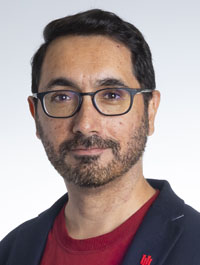
Dr. Bulent Dogan is a Clinical Professor of Learning, Design and Technology at the University of Houston and a longtime researcher in digital storytelling, educational technology, STEM education, and emerging technologies for learning. His research on digital storytelling examines its impact on student engagement, creativity, media literacy, self-efficacy, 21st-century skills, project-based learning, and STEM education. Dr. Dogan is the founder and director of DISTCO — International Digital Storytelling Contest and leads the University of Houston’s Educational Uses of Digital Storytelling project, a comprehensive resource for educators, students, and researchers interested in digital storytelling. His work with DISTCO has generated more than a decade of research examining how students and educators create, experience, and learn through digital stories.
Competition Schedule
Follow each round from registration to final winners:
1 – Registration Period
Duration: October 08, 2026 – November 6, 2026
Each individual or team (via a designated team leader) registers on the Centennial Games website by submitting:
- Individual or Team Members
- UH Cougarnet email address
- Project Title
After registration, individuals or teams receive the official digital storytelling competition rules and begin developing their digital stories.
2 –Submit Digital Story
Deadline: March 1, 2027
An individual or team leader must submit at least one Digital Story (video or accessible link, final script, media-sources/copyright record, and all required disclosures and releases) by the deadline of March 1, 2027 to be considered for Initial Judging.
The complete digital story and all supporting materials must be submitted by March 1, 2027. The final submission form should collect:
- Registration confirmation or entry ID
- Final project title
- Final digital storytelling category
- Final brief description or synopsis
- Individual or group designation
- Confirmation of the participant list and each member's role
- One viewable digital story, submitted through one of the following methods:
- A working UH OneDrive link that grants judges view access without requesting permission; or
- A working YouTube link set to Public or Unlisted; or a direct MP4 upload through the official portal, not exceeding 300 MB
- The complete final script in an accessible file format
- A copyright and media-sources record covering all images, music, sound effects, video clips, fonts, datasets, archival material, and other third-party elements
- A list of original media created by the participant or team
- Documentation of licenses or written permissions when required
- Disclosure of generative-AI tools and other significant outside assistance, if used
- Script: Captions or a transcript; English subtitles are required when the narration or dialogue is not in English
- Required participant consent, originality certification, and media/publicity release selections
- Acknowledgment of Media Release and Publication Permission
Links must remain active and accessible throughout judging and until the award process is complete. A private, inaccessible, removed, or password-protected link may make the entry ineligible if it is not corrected by a stated cure deadline.
Final judging: Finalists will be evaluated by a final judging panel. The panel's decision is final. Judges should disclose conflicts of interest and recuse themselves when appropriate.
Evaluation Rubric: A group of content-expert judges will evaluate the projects. We will follow the DISTCO Digital Storytelling Evaluation Rubric to judge the projects. In addition to the rubric criteria, we will evaluate projects based on eligibility, creativity, and whether they meet other project requirements.
You can see the DISTCO Digital Storytelling Evaluation Rubric here:
DISTCO Digital Storytelling Evaluation Rubric
Download PDF
Final scoring criteria will be based on the following criterion:
| Criterion | Recommended weight |
|---|---|
| Scoring from the DISTCO Rubric | 70% |
| Following Centennial Games Rules and Eligibility Criteria | 10% |
| Team size | 1–3 |
| Audience impact and engagement | 10% |
| Responsible AI practice | 10% |
| Total | 100% |
The final rubric and any tie-breaking procedure should be published before submissions close. Audience or popular voting should not be included unless the organizers publish a separate process, security safeguards, and the exact role of public votes in advance.
3– Initial Judging
Completed by: March 15, 2027
Administrative and eligibility review: Organizers will first verify enrollment, registration, required files, link access, duration, participant information, releases, originality certification, copyright documentation, and AI disclosure. Organizers may allow a short correction period for minor administrative or technical errors, but they are not required to accept substantive changes after the deadline.
Initial judging: Eligible judges will evaluate eligible entries using the published Digital Storytelling Competition rubric. The highest-rated entries will advance to the final round. The number of finalists may depend on the number and quality of eligible submissions.
4- Final Judging
Date: March 15, 2027 – April 1, 2027
After initial judging, qualified projects will move on to the final round for judging, and evaluations will be completed by April 1, 2027. Finalists may be required to make changes or additions to their final digital stories during this time.
Final Round
The competition results will be posted on the Centennial Games website on or after April 7, 2027. Winners will be invited to the award ceremony on April 20th, 2027.
Award Ceremony
Duration: Tuesday, April 20, 2027
The winners will be invited to the Award Ceremony at LOCATION TBD.
- 1st Place: $6,000, to be divided equally among each officially registered member of the team
- 2nd Place: $3,000, to be divided equally among each officially registered member of the team
- 3rd Place: $1,000, to be divided equally among each officially registered member of the team
Ready to Register Your Team?
Ensure your team meets all qualifications.
- All team members are eligible UH main campus students for Fall 2026.
- Designated team leader with UH Cougarnet ID and email address.
Team Registration
Contact Us
If you have any questions about the contest, please reach out to Dr. Bulent Dogan, Clinical Professor & Specialization Lead, Learning, Design and Technology (M.Ed.) at bdogan@cougarnet.uh.edu.